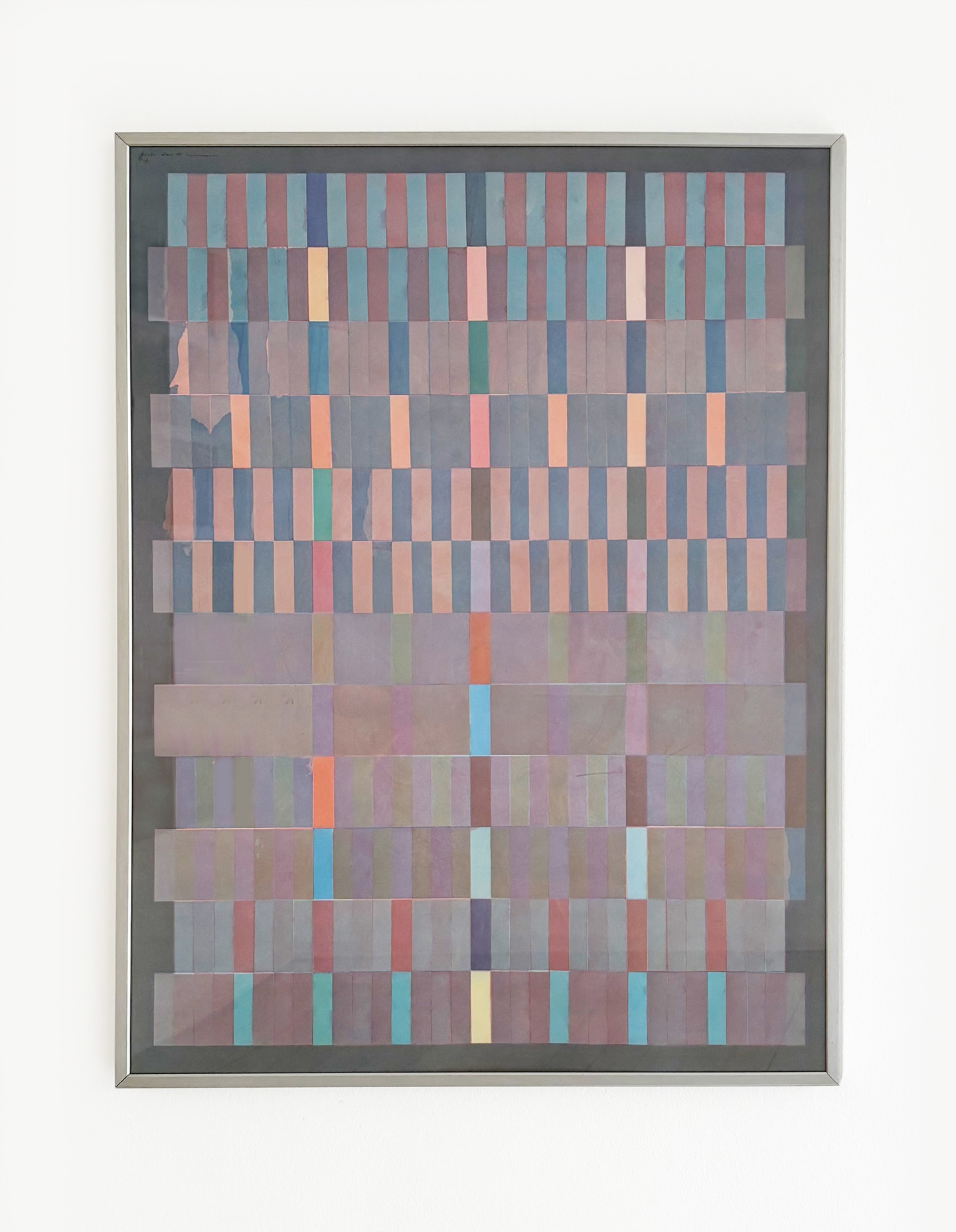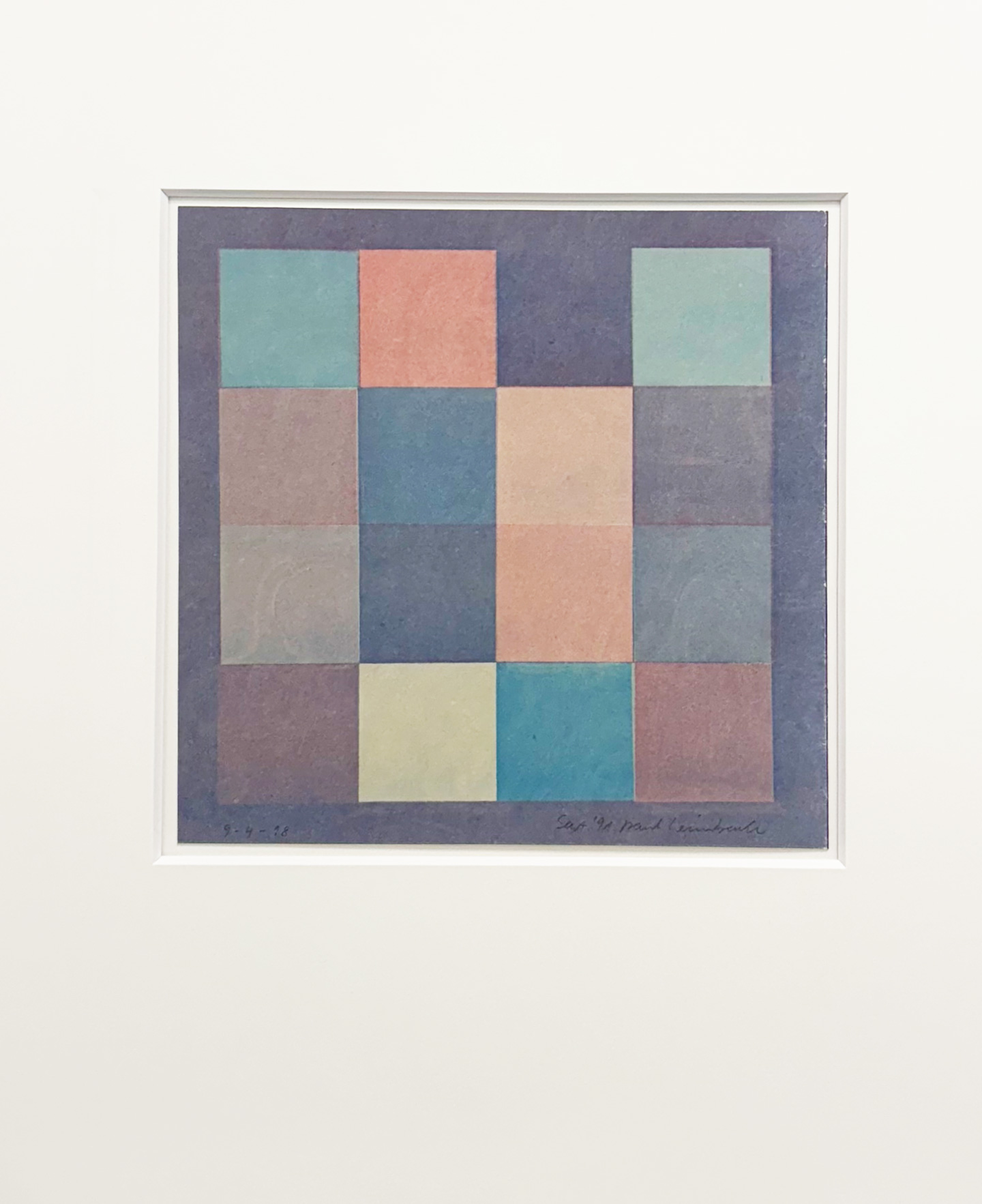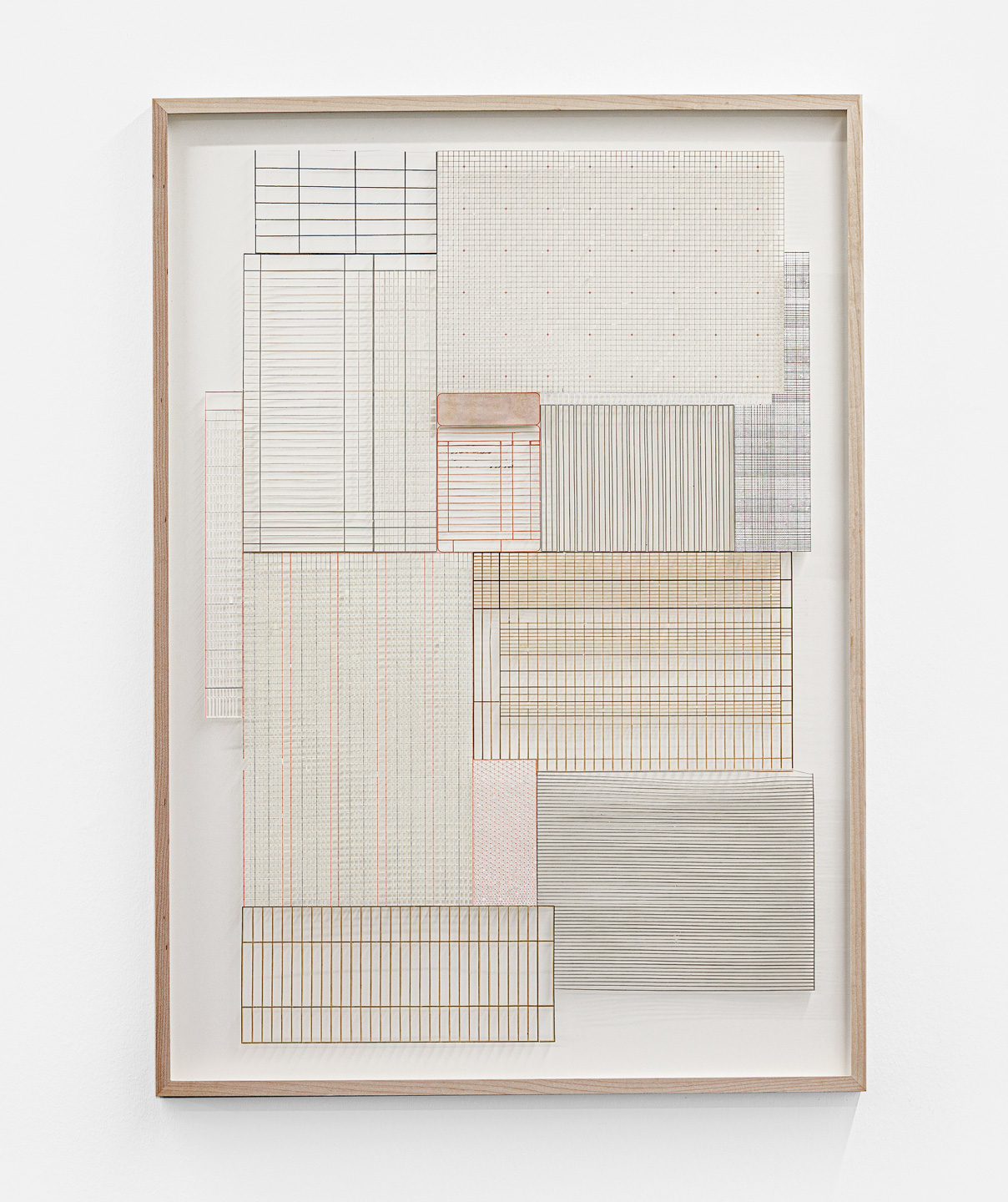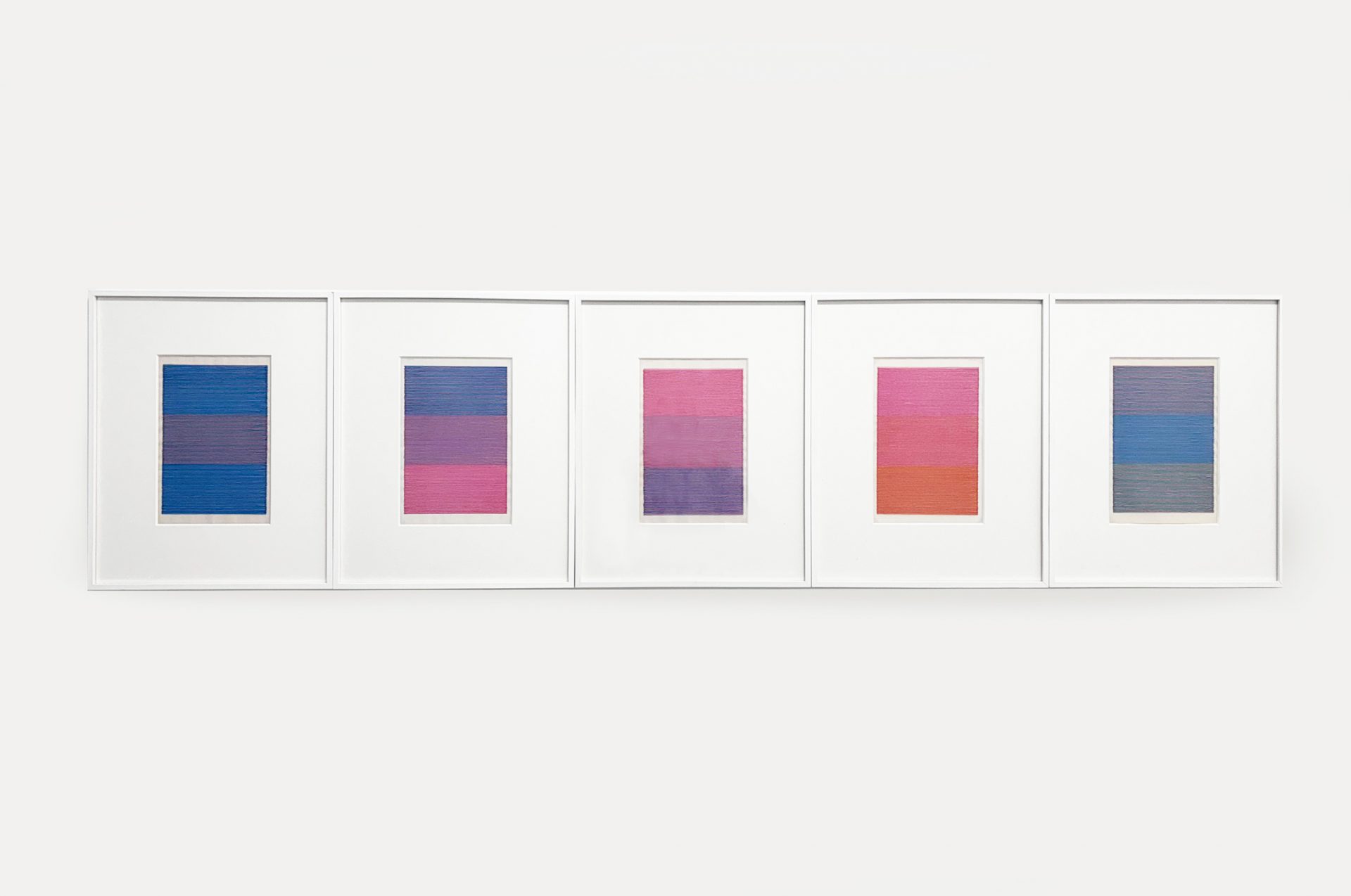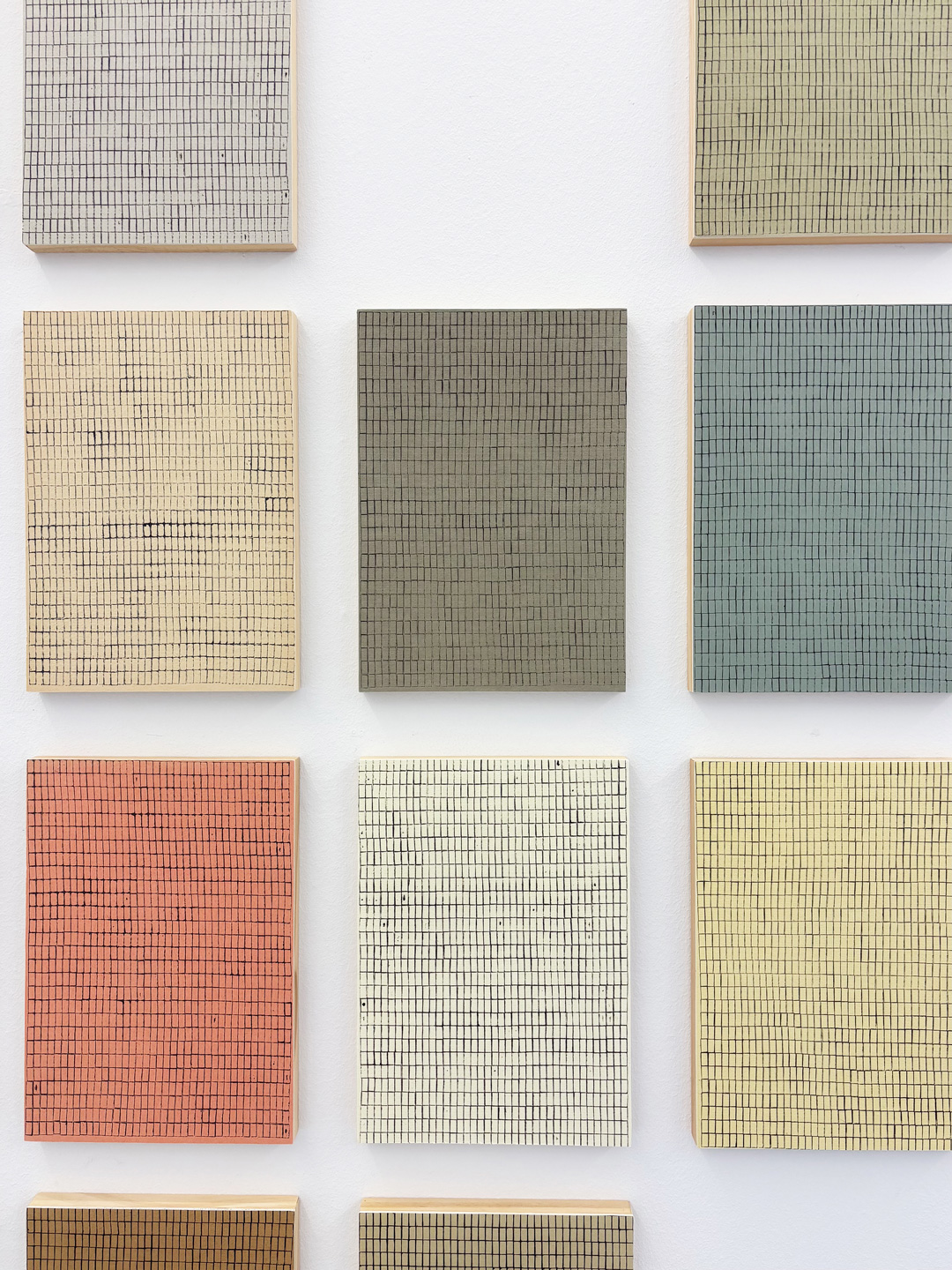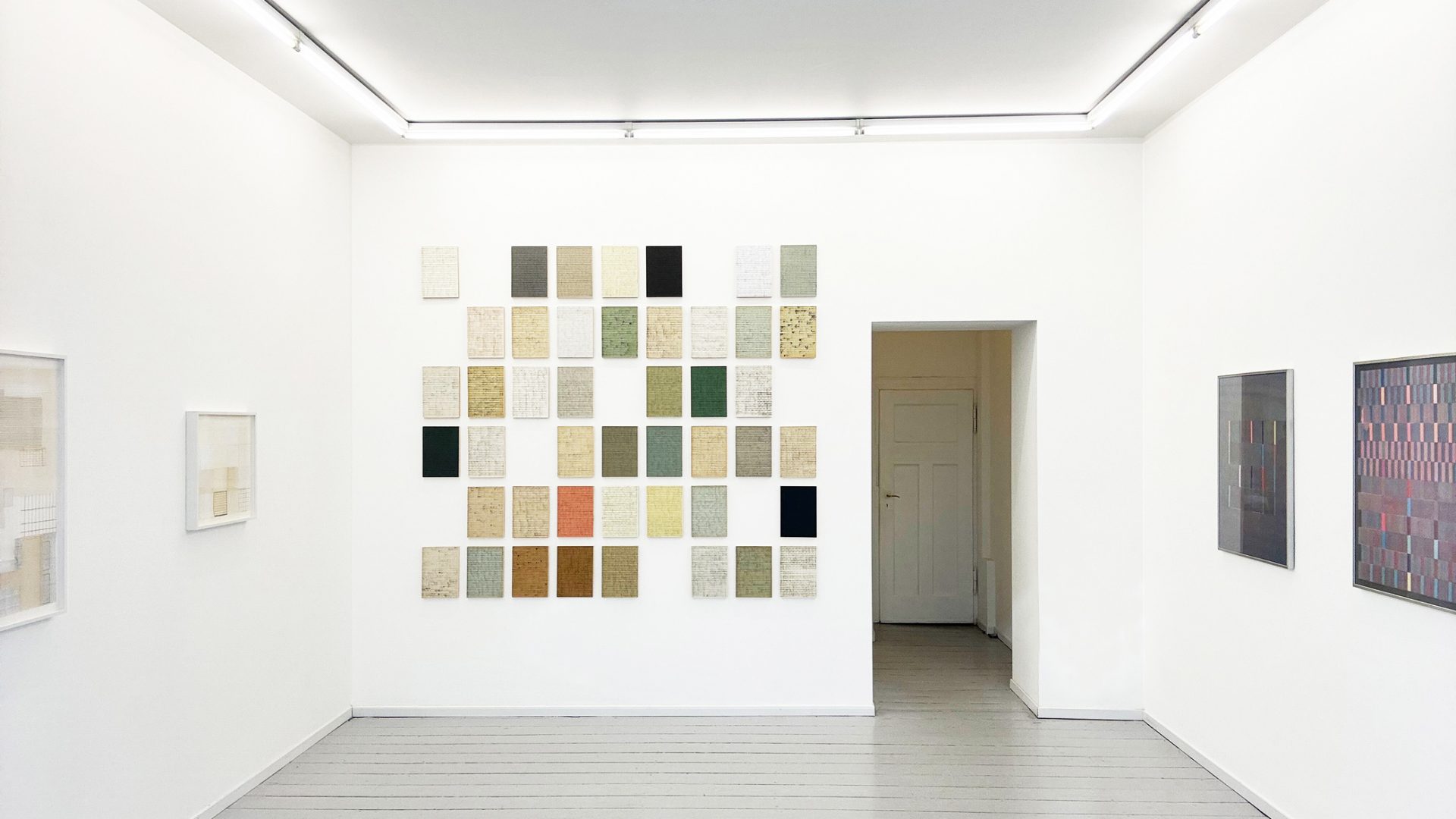
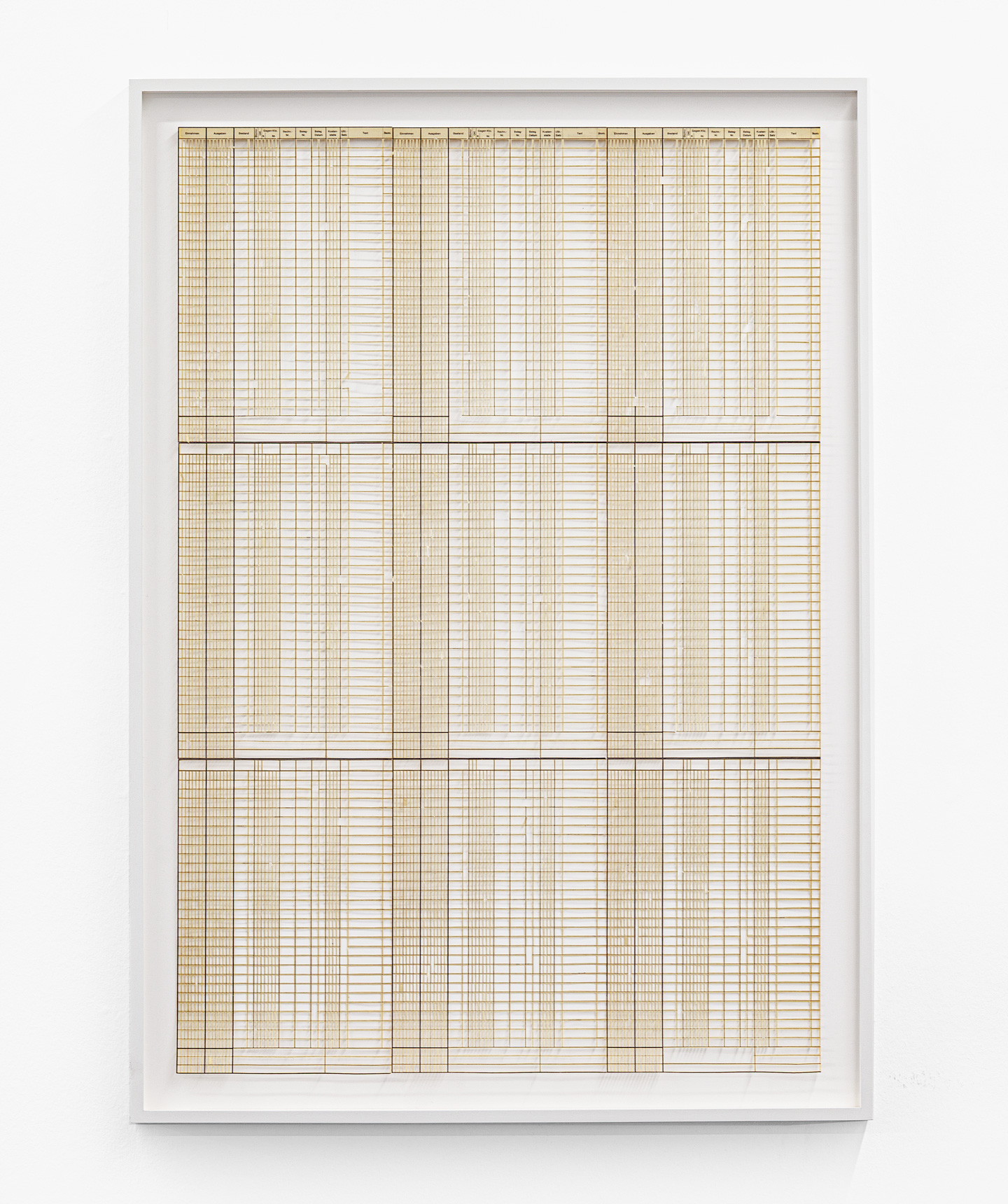
The „silent logic of deviation“ forms a common point of reference for two artistic positions in which structure appears not as a conclusion but as an ongoing process. The works of Fiene Scharp and Paul Heimbach encounter two independent ways of thinking and working that understand order not as a goal but as a prerequisite — as a system that only becomes visible through minimal deviations, interruptions, and shifts.
Berlin artist Fiene Scharp (born 1984), works with paper, cuts, lines, and space. Her works arise from precise settings, repetition, and grids that never remain closed. The intervention — the cut, the opening, the omission —creates a field of tension in which structure becomes fragile and perception reorganizes itself. Deviation appears here not as a disturbance, but as a necessary precondition of form.
Paul Heimbach (1946–2013) developed his work from serial, systematic processes. Color, form, and sequence follow clearly defined rules that question themselves in the process of their implementation. For Heimbach, the series is not a medium of repetition, but an instrument of insight: each variation shifts the system minimally and reveals its internal logic — and its limits.
It is precisely this difference that creates the productive tension of the joint presentation. While Scharp thinks in terms of materiality and intervention, Heimbach works from the structure and its consistent implementation. Both positions converge in an attitude that does not confuse precision with closedness and does not play order off against openness.